
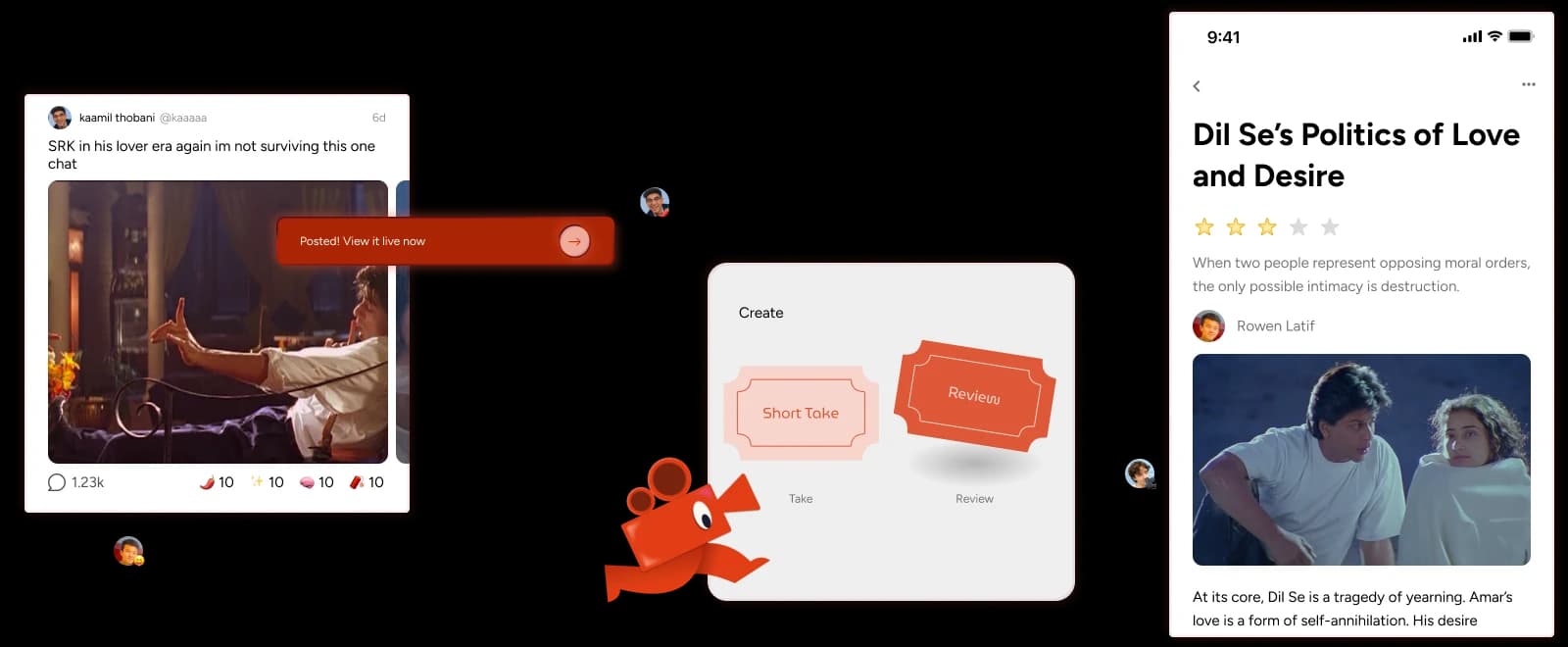
CineCircle
Designing a community space for South Asian cinema fans
Role
Product Designer
Team
Project Manager
Design & Tech Leads
4 Designers
Timeline
Sept 2025 — Dec 2025
Skills
Figma
FigmaMake
Adobe AfterEffects
REMINDER
This case study is currently in the process of being revamped! You can keep scrolling below to view the older iteration.

PROBLEM
It's hard to sustain meaningful movie discussions on social platforms
Fans found themselves stuck between fragmented group chats and noisy comment threads, where thoughtful takes got buried and real conversation about the films they loved never had a place to live.
RESEARCH
Understanding South Asian film fans
Talking to South Asian film enthusiasts, I identified the main themes to bridge their shared pain points and guide our designs:

Private Expression
Preferred group chats over online platforms

Low Psychological Safety
Fear of backlash and harsh discourse

Repetitive Exposure
Same films circulated, limiting discovery

Not Intuitive
Dense information and unintuitive interactions
How might we design an experience that encourages fans to express their perspectives clearly and confidently in a digital space?
IDEATING
Clarifying what a “post” needed to communicate
In early ideation sessions, I clarified what a “post” fundamentally needed to communicate because users express differently.
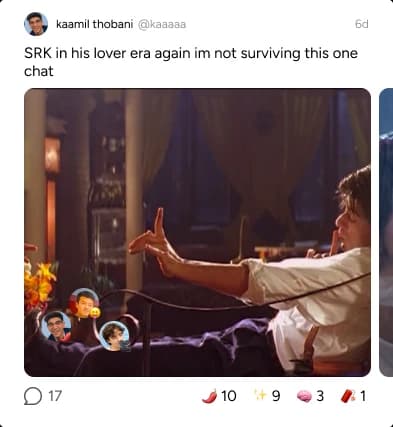
…forming an opinion?
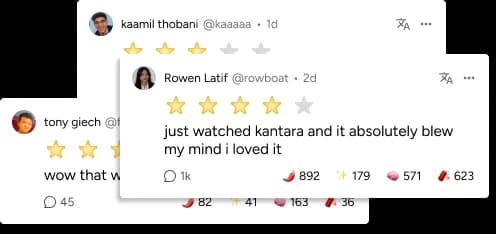
...rating a film?
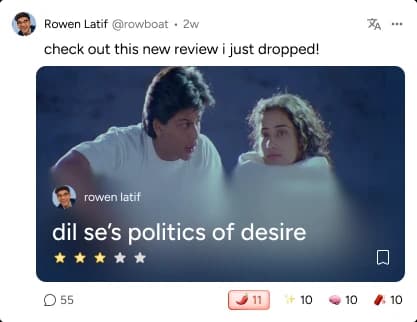
…writing reviews?
SOLUTION
Designing a posting flow that adapts to different types of expressions
Rather than merging post types into one editor, I separated the flows to let users choose between short and long form before writing. I found that asking users to select their post type upfront (short or long form) made posting more intuitive and efficient by aligning the interface with their intent. In early prototypes, I tested a single editor for all content types. During reviews, users struggled to decide how much to write once already in the flow, especially when switching between casual reactions and in-depth reviews.
INITIAL DESIGNS
Combined flow caused confusion
FINAL DESIGNS
Clear entry point showed more intentional expression
DESIGN
Short form posts
Most users respond instinctively to films. By designing a lightweight post format (280 characters, media-only, no formatting tools), fans can quickly express initial reactions without cognitive pressure.
Long form posts
For users ready to articulate more thoughtful perspectives, structured inputs (movie selection, rating, tagging, formatting tools) enable depth without overwhelming those who prefer brevity.
Replacing likes with reactions
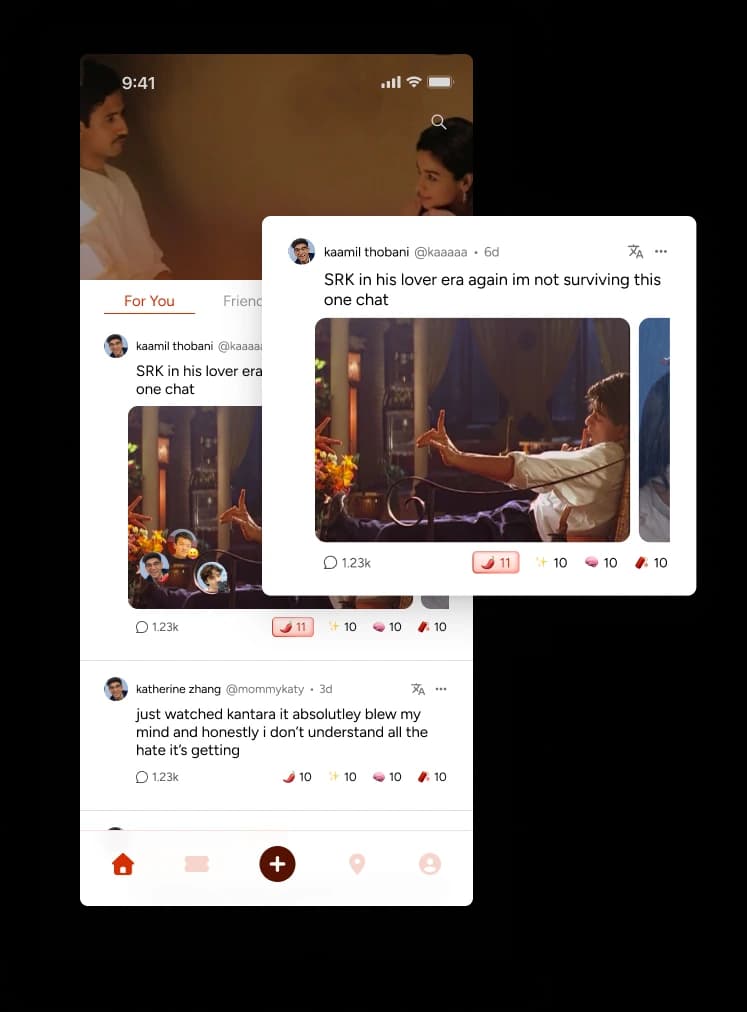
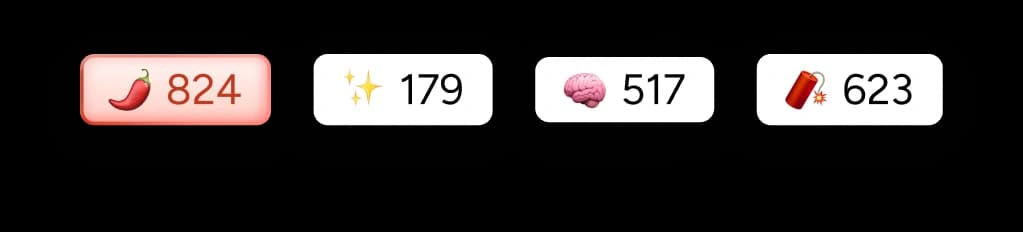
Instead of neutral likes, reactions such as Spicy or Thought-Provoking allow users to convey emotional tone and cultural relevance, shifting engagement from validation to expression.
REFLECTIONS
Mistakes, Metrics, and Moving Forward…
Designing for passionate, opinionated film fans taught me lessons no design course ever could.
✎ᝰ Designing for casual film fans
Casual fans move fast between apps. I learned to test with real film fans, not just designers, and prioritize simplicity over feature completeness.
𝄞⨾𓍢ִ໋ Too many options overwhelm users
Too many customization options created decision paralysis. Finding the right defaults was harder than designing the features themselves.
𝄞⨾𓍢ִ໋ With more time…
I'd explore richer reaction analytics, watch-party features, and smarter recommendations that keep momentum in the conversation.
OUTCOME
So, what did all this work accomplish?
I designed CineCircle's full posting experience from 0-1 — separating short and long-form flows and replacing likes with expressive reactions. Early testers spent more time writing thoughtful takes and reported feeling safer sharing unpopular opinions, turning passive scrolling into real film discussion.
NEXT IN THE COLLECTION
PERPLEXITY, 2026
Improving AI Adoption
UX Research